Japan, my country
I wanted to visit Japan since I was a kid, I finally got the chance as a grown up, I planned my trip… for 2020. COVID19 happened.
I finally managed to travel in 2025, and it felt a bit like going home.
Places and architecture were familiar. Behaviours seemed natural. Signage made sense. Food I’d never tasted was clearly recognizable and appetizing.
It turned out, I had been living in Japan for a long time. Consuming inordinate amounts of foreign pop culture has an effect on you. And I’ve consumed a lot of Japanese content, for a long time.
An Italian childhood
I grew up in Italy in the ’80s, when Japan had become the strongest economy in the world, and Italy was becoming more economically liberal.
We saw Japan becoming dominant first hand through TV. So called “private” TV channels (in contrast to the public broadcasting of RAI) were booming§, and very often they used Japanese shows to fill their programming.
All the kids of my generation grew up watching anime such as Captain Tsubasa, Lupin The Third and many more. We also got some live action such as Godzilla, Megaloman, Ultraman etc.. I suppose TVs bought TOHO stock in bulk. I can’t forget the Megaloman fighting scenes, and his hair-on-fire-attack, which was translated in italian as something like “flame of megalopolis” (see here). There were even anime/tokusatsu hybrids such as the awesome Kyouryuu Daisensou Aizenborg.
Ironically, “cartoni animati” in Italy were mostly identified with western children animation, which does not really translate to Japanese anime 1:1. This meant we got ultra-violent stuff on afternoon programming such as Fist of the North Star. Parents complained, kids loved it.
We also got TV shows (Takeshi’s Castle and Za Gaman), with italian commentary. It was deeply funny.
So, it’s only natural that, when I finally got to the country of the rising sun, it felt familiar. The two-story houses, the trains, the school kids in their uniforms, the monks and mikos, the takoyaki vendors and the ramen bars. Just like I remembered it.
A tourist country
Truth is, Dear Reader, I didn’t have a chance to see the real country. I spent a couple weeks going around popular destinations, and I got exposed to what may effectively be the Disneyland version of Japan.
I am not one to decry the fact that tourists visit popular spots. There’s a reason they’re popular. I’ve lived near Rome all my life, I know how it goes.
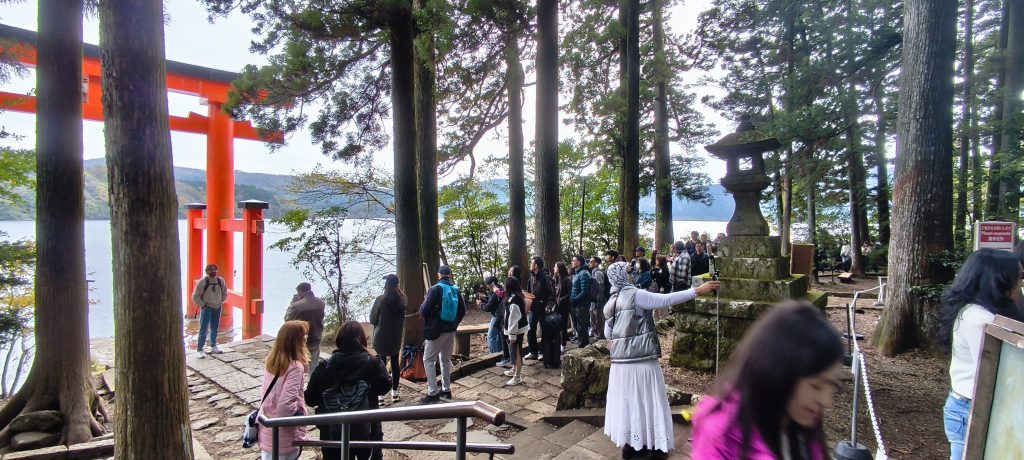
So I don’t mind the touristified version of the sights. But I am aware that it does not reflect the reality of the country outside of those places.
What I found interesting, as a European, is that you get less of a feeling of overtourism due to the presence of many asian tourists. You’re walking around, and thinking “look at that cute couple dressed in kimonos” and it takes a while to realize those are Korean tourists who’re just taking pictures in cool foreign clothes.
It is my understanding that Japan is overrun with tourists, and locals are annoyed by them. I’m not sure there’s a “solution” to mass tourism. I can point out there’s at least one initiative to educate tourists and locals to interact in a positive way.
I’ve gone trough it, and I thought it was pretty obvious stuff. Then I was on a bus where a bunch of tourists (germans, americans, koreans) did not leave a seat to an old lady with a small kid, and it made me realize it wasn’t that obvious.
Try not to be a dick, at home or abroad.
Off the main path, just a little
To be fair, it’s not that difficult to move away from the main tourist crowds. You may have noticed this before, Wise Reader, but quick trips have a problem of prioritization. If you spend one day in Rome, you will go see the Colosseum and St Peter’s Basilica. If you spend three days you may see Saint Paul Outside the Walls. Only if you spend many days, you will have a chance to visit the Palazzo della Civiltà Italiana, even tho it’s one of the most interesting artifact of rationalist/fascist architecture, and a pretty unique sight.
This is the same in Japan, in my experience. Some people plan to spend 3 days in Tokyo, and that’s barely enough to get off the plane. If you spend a week, you’ll be visiting many places where there’s not that many tourists.
This also works if you get away from the crowd time-wise. I visited a couple temples at sunrise, when the monks do their morning rituals, and the streets are almost empty, and it was a pretty nice experience.
Variety
If you think about it, it’s pretty obvious that Japan is a very varied country.
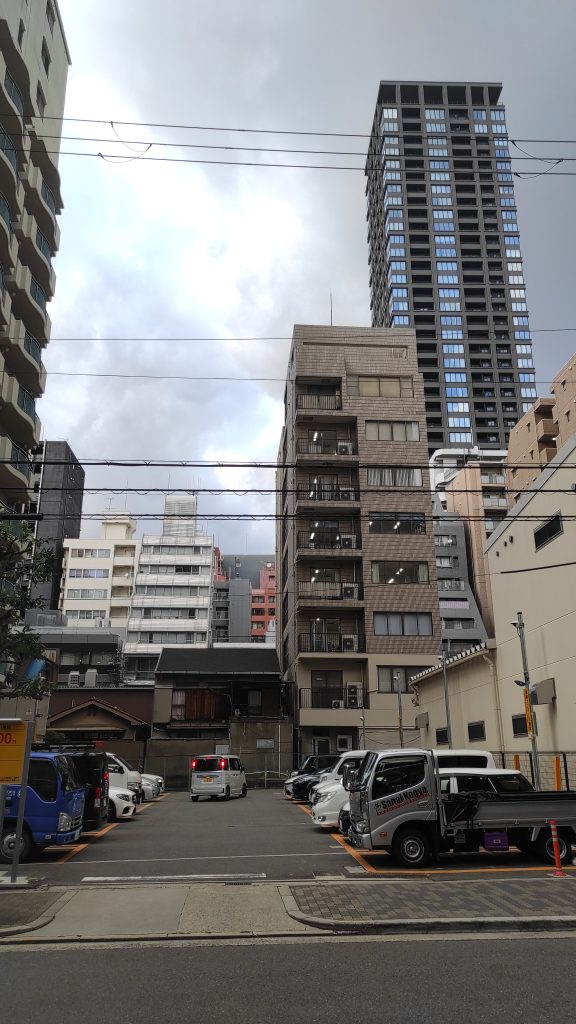
In a short walk you can go from buddhist temples to pachinko parlors, from shopping malls to old micro shops ran by old ladies . Heck, I found a shrine in an underpass. Small houses, skyscrapers, and everything in-between.
Even the people appear to be… weird? I mean, not weird in the sense that they are not like Europeans, they seem to genuinely have a bunch of overlapping subcultures.
Maybe it comes from living in megalopolis like Tokyo? It’s hard to be a rockabilly dancer when everyone around you is a metal head or a b-boy. But if you know you can find your kind of people then you become free(-er?) to be whatever you want. The urbanization offsets the social pressure: on the Tokyo metro, nobody knows your mom.
And talking of moms: one of the things that really surprised me about Japan was the amount of kids going around. Given the messed up demographics of the country, one would expect to see few small kids. But there’s a ton of them! I believe this is mainly caused by kids going to school alone, which is cool.
I also saw something really odd a couple times, a bunch of babies and toddlers carried around in a small cart by women§. I suppose this is some kind of home-nursery delivery system for busy parents, which is kind of cool. Again, Japan is weird, and varied.
In the year 2000 since the 1980
This hodge-podgeity naturally extends to technology. Japan was insanely advanced in the ’80s, what with their fast trains and their computerized things. And they’re still there. What seems to be missing, is that the rest of the world has moved on, and Japan hardly did. This means you still have futuristic trains, and you can use a single contact card to get on public transport everywhere… but you need to pay with cash, cause the machines won’t take a payment card.
Many things in Japan seem to have reached some kind of weird local maximum, often based on the incredible dedication of the average worker. Why automate paying with a credit card, when people can queue up to top up their cards with cash? I suspect this is the reason things like shisa kanko are a thing.
Japan is a country of strong traditions and identity, and, no pun intended, it has in many ways an insular culture.
The country was practically isolated§ from the west for centuries, until the so-called Meiji restoration/revolution happened. The country was opened up and modernized practically by force.
Perhaps mass tourism will represent a new form of forced opening. The hope is that, as the culture survived the 150 years after the Meiji restoration, it will survive the next 150. It would be sad if we lost it.
Family & Future
My kids were, somehow, natural born weeaboo, even tho I seldom consume Japan content near them. The young ones claims that Japan is his favourite country, and the older one bought a “drawing kawaii characters” book last year. By sheer chance, they go to a school where they can learn Japanese as an optional class. This is the weirdest kind of epigenetics I have ever seen.
So my hope is to go back in a few years time, with them perhaps. They’ll be more in sync with modern Japanese culture than I can ever be, cause the future is a different country, much further away than a continent. It will be interesting to be there.
I have more things to say, but I also have things to say about a bunch of other things, and this is getting long enough. I’ll have another article on Japan later, perhaps. Hopefully, before my next trip.